
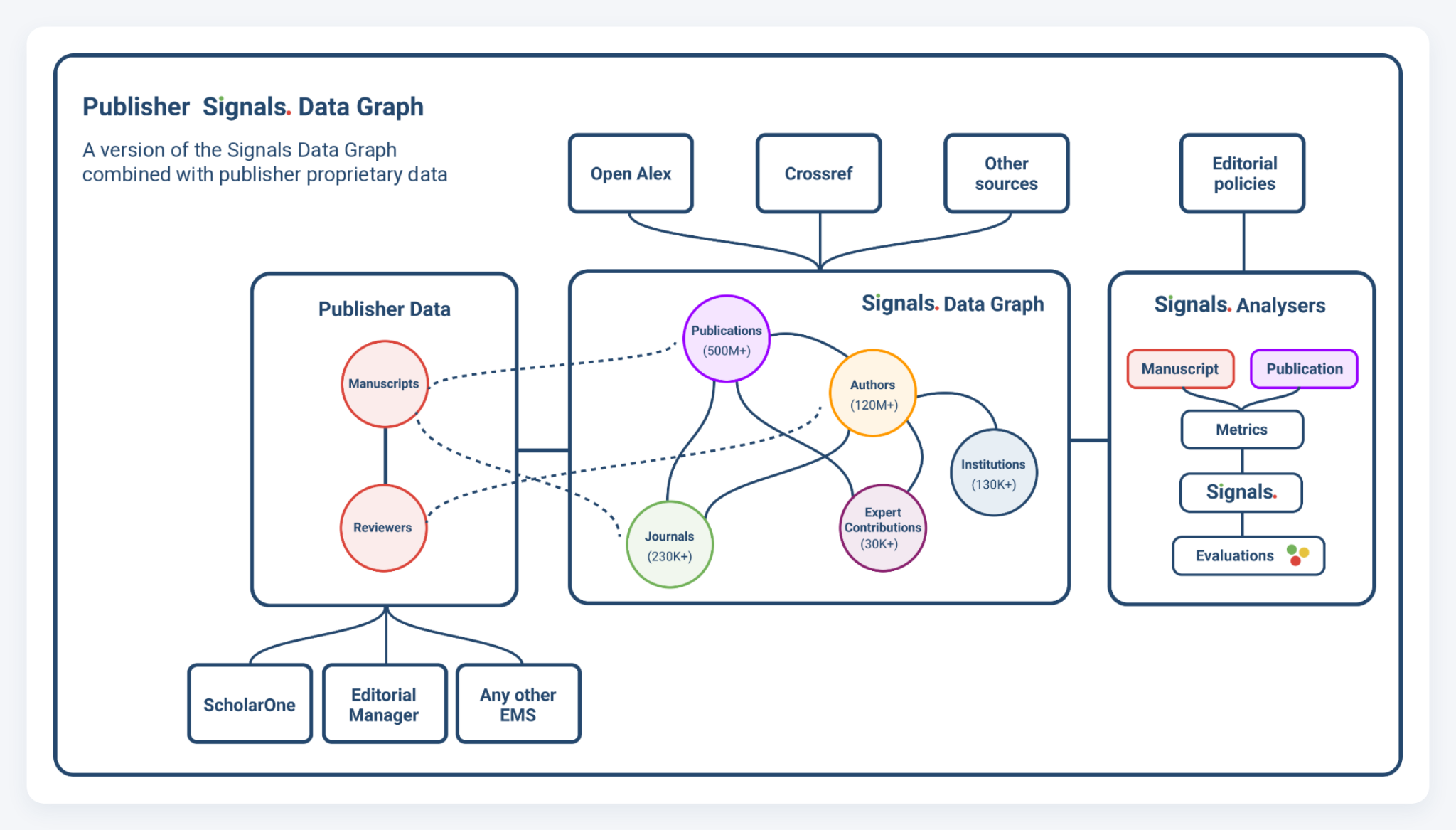
Research integrity tools typically look at one manuscript at a time, but some of the hardest cases to identify will never be caught that way.
In a recent trial with a publisher, Signal Manuscript Checks uncovered one network of co-authors who submitted dozens of manuscripts within a few weeks to a handful of journals from that publisher. Checked individually, many of those manuscripts didn’t show any other clear red flags. The concerning pattern only appeared when the submissions were connected to each other: a single group of authors behind nearly half of one journal’s submissions in that period.
This is the type of problem the Publisher SDG is built to solve.
Understanding the Publisher SDG
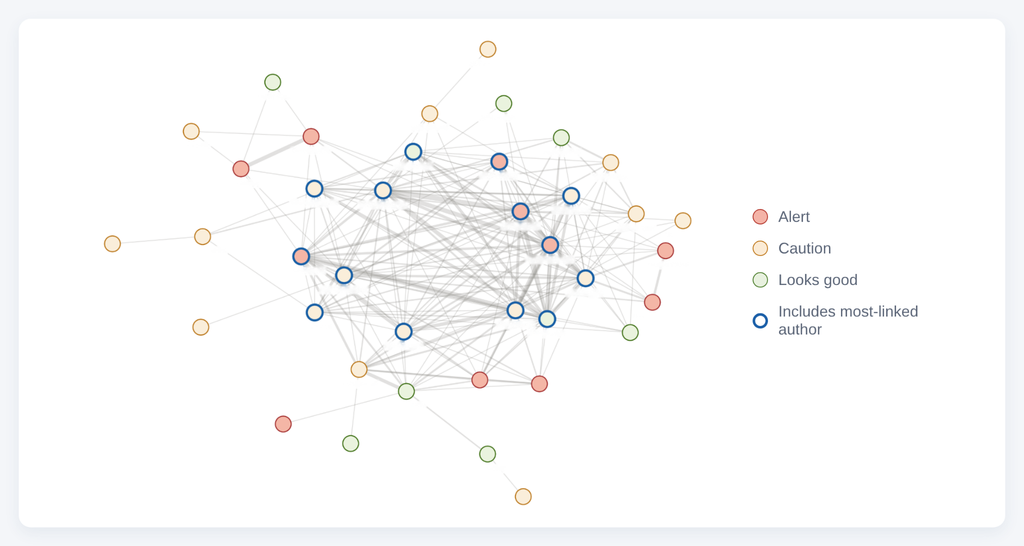
The Signals Data Graph (SDG) – our source of truth for scholarly data – is the foundation of every Signals product. It connects millions of publications, authors, journals and institutions.
For each publisher we build a Publisher SDG: their own version of the graph that combines the global publication record with the publisher’s own submission and reviewer data, through live integrations with ScholarOne, Editorial Manager, eJP and other editorial management systems. It is accessible only to that publisher and Signals, and the insights get cumulatively better with every new submission.
What it unlocks
Insights only the publisher can see:
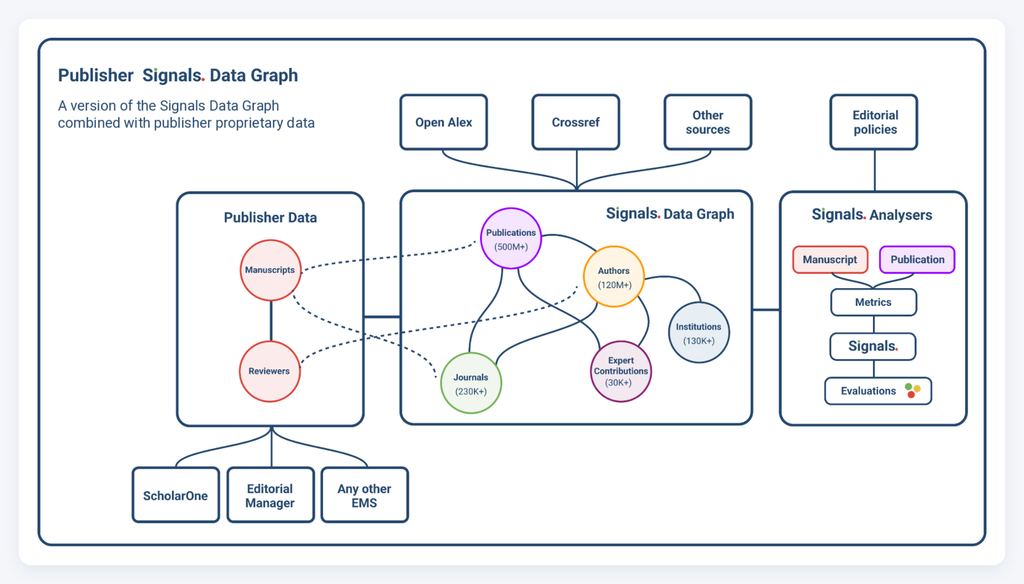
The Publisher SDG makes Super Signals possible: a new type of signal that depends on the context from prior submissions. These signals trace author networks linked through co-authorship across publications and submissions, including rejected and in-progress manuscripts. They pick up repeat authors, such as one who submitted a dozen in a week, none with significant signals on their own. And they connect reviewers and authors through prior co-publication, surfacing close collaborators and potential conflicts of interest.
An indispensable view on the authors profile:
Author Profiles show editors who the submitting authors are, showing their past publications, affiliations, main topics and research integrity record. These profiles update automatically with each submission, ensuring that the publisher always gets the most up-to-date view of their authors.
New products and features delivered faster and efficiently:
Once the integration with a journal is live, every submission is processed automatically and the Publisher SDG keeps growing. With a lot of the heavy lifting already done, new products and features can draw on that same data, so they cost less to add and operate as the publisher doesn’t have to pay for the cost of, for example, manuscript data extraction that only needs to be done once.
What this means for publishers
Every publisher wants to grow submissions without growing risk. That is hard when each manuscript is assessed alone, because volume is exactly where coordinated behaviour hides. The Publisher SDG turns volume into an advantage: the more a publisher receives, the more context there is to judge the next submission against. Hard-to-find patterns surface at submission, before peer review. Integrity teams decide with confidence because the evidence is already connected, and editors and reviewers give their time to research that deserves it. Because the graph keeps building, that protection strengthens as the portfolio grows, which is what makes growth sustainable.
If you would like to see what a Publisher SDG could show you about your own submissions, get in touch at hello@research-signals.com or visit research-signals.com.