An integrity flag is only as useful as the evidence behind it
Spotting potential problems in a manuscript is one thing but knowing whether they are genuine issues is another. Whilst automated screening can help editorial teams identify research integrity concerns quickly, false positives can create extra work and a flag without clear supporting evidence can be difficult to act upon.
Our latest major platform update provides significant improvements to ‘Content Signals’ in Signals Manuscript Checks; it makes it easier to see exactly why an issue has been flagged, reduces false positives and introduces three new checks for potential problems in manuscript Content.
Pinpointing triggers for Content Signals
Content Signals help publishers identify potential research integrity issues in submitted manuscripts. These signals look for problems such as missing declarations, statements describing different studies and text left behind from LLMs.
Until now, checking a flagged issue meant searching through the manuscript to find the relevant content but that’s been made much easier within Signals Manuscript Checks.
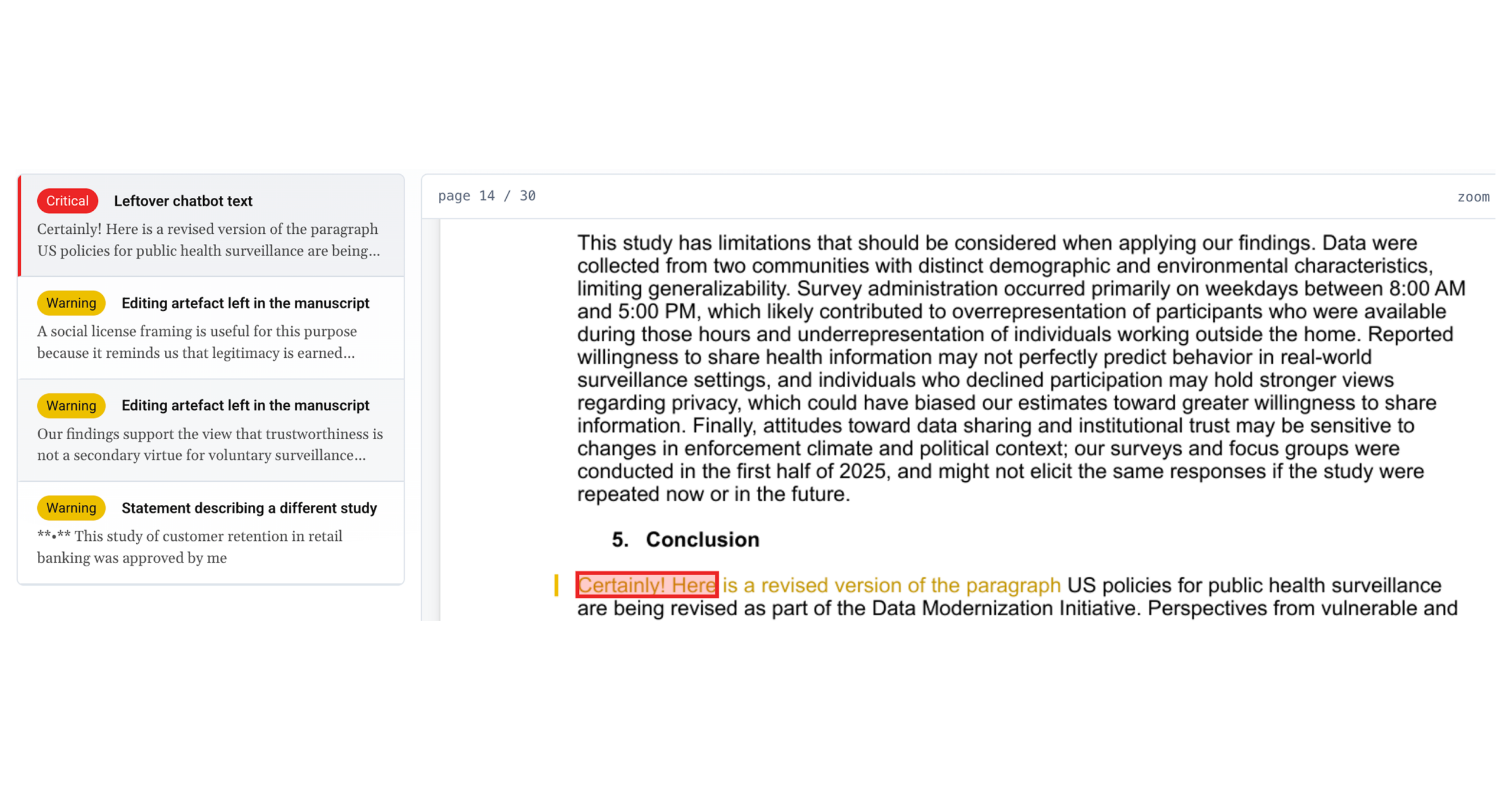
Every Content Signal now includes the exact words from the manuscript that triggered it. A new PDF viewer in the ‘Content’ tab displays signals alongside the manuscript itself. Select a signal and you get taken straight to the relevant page with the content highlighted or click a highlight to see the associated signal. Each signal identifies the section of the manuscript where the issue appears, for example, Methods or Ethics.
For editors this means they can check the evidence themselves in moments without having to search the manuscript manually or rely solely on an automated interpretation.
Three new checks for manuscript content
We’ve introduced three new Content Signals to identify potential problems that can be easy to miss during editorial assessment:
- Statements describing a different study: An ethics, consent, funding or methods statement may refer to a study that doesn’t match the manuscript it’s included in. This can happen when text is copied from another document or a template isn’t properly updated. Signals now flag these inconsistencies for closer inspection.
- Figures that don’t match their captions: A figure may show something different from what its caption describes, for example when two figures have been accidentally swapped. The new check identifies these mismatches, helping editors catch errors that might otherwise go unnoticed.
- Editing artefacts left in the manuscript: Manuscripts sometimes contain remnants of the writing and editing process, such as “Error! Reference source not found” or unfilled template placeholders. Signals now identifies these artefacts so they can be addressed before peer review.
These checks are designed to highlight potential issues, not determine whether a manuscript contains misconduct. There may be legitimate explanations for flagged content, which is why making the underlying evidence easy to inspect is critical.
Improving existing checks and reducing false positives
Alongside the new checks, we’ve made improvements to how existing Content Signals are generated, addressing issues raised through user feedback.
Each potential issue is now checked several times before the final result is presented. We’ve also refined three existing checks to reduce unnecessary flags:
- Leftover chatbot text: Identifies text copied from chatbot responses and accidentally left in a manuscript, such as “As an AI language model…”. It now distinguishes these leftovers from legitimate quotations in papers discussing chatbots.
- Unreadable text in a figure: Identifies labels that don’t contain recognisable words, which can be a sign of AI-generated imagery. Ordinary typos are now ignored, and a label is only flagged if it doesn’t appear elsewhere in the manuscript text.
- Missing declaration: This check looks for missing conflict-of-interest, funding or ethics statements where required.
An automated check is only useful if editors can trust what it finds. By reducing false positives, these improvements help editorial teams spend less time investigating false alarms and more time assessing issues that genuinely need attention.
Supporting editorial decisions with clearer evidence
As AI-assisted manuscript screening becomes more widely used, transparency matters. Editorial teams need to understand not just what a system has flagged, but why.
By linking every Content Signal directly to its supporting evidence, we’re making it easier for editorial teams to assess potential problems and decide what next step to take.
If you’re already using Signals, open the Content tab in your next manuscript evaluation to explore the new viewer and signals. As always we welcome feedback.
Book a 30 min discovery call to understand how Signals can support your editorial team to make confident and efficient research integrity decisions. Book here or contact hello@research-signals.com
Get in touch
Email us at hello@www.research-signals.com
Fill in our demo request form
Following us on LinkedIn